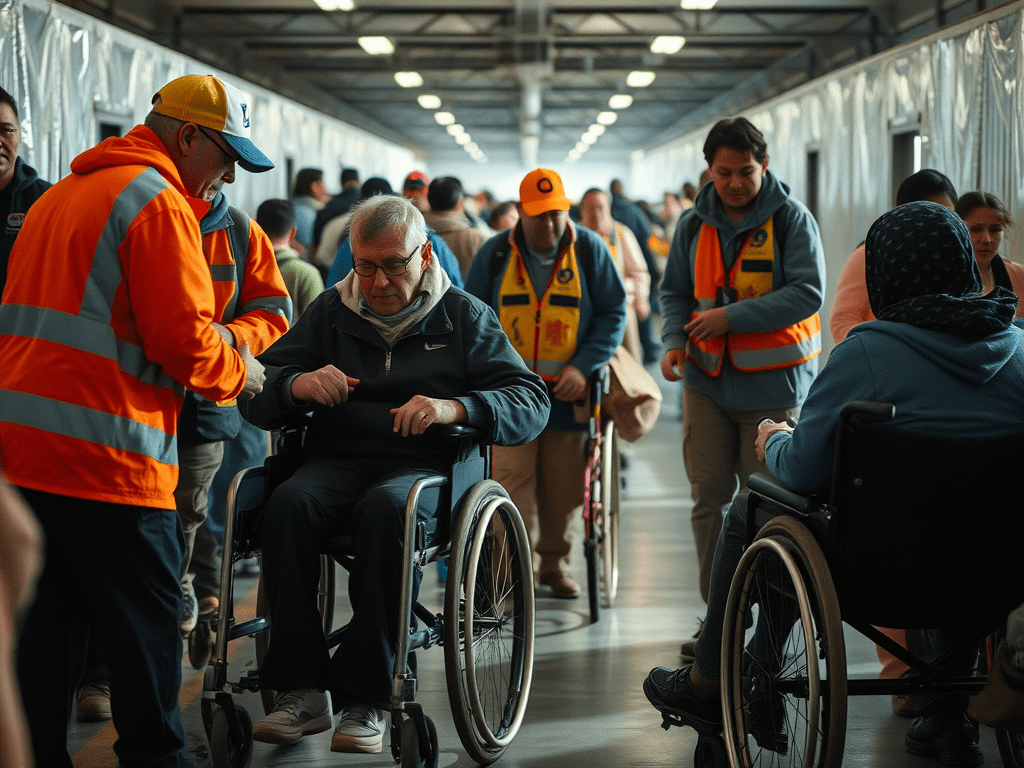
The climate crisis is no longer a distant threat; it’s a reality we face every day. Rising global temperatures, extreme weather events, and environmental degradation are affecting communities across the globe. However, as climate disasters grow more frequent, one group remains disproportionately affected yet consistently overlooked—disabled and chronically ill people.
While public discourse on the climate crisis often centers on sustainability and mitigation, it rarely addresses the ways in which marginalized communities, particularly those with disabilities and chronic illnesses, are being left behind in the face of climate disasters. Inaccessible evacuation plans, shelters that fail to accommodate medical needs, and a lack of inclusion in policy discussions are just a few of the ways in which our community is excluded from climate adaptation strategies.
For many disabled and chronically ill individuals, climate disasters are not just about surviving the immediate threats posed by hurricanes, wildfires, floods, or heatwaves. They are about navigating a system that has consistently failed to provide accessible and inclusive support in times of crisis.
Evacuation plans are often designed with the assumption that everyone is able to leave. Shelters lack accessible bedding/bathrooms, leaving those with mobility aids with access needs unmet. Power outages can spell disaster for those relying on life-sustaining medical equipment, and emergency communication is frequently inaccessible to (d)Deaf/hard of hearing or neurodivergent individuals.
These systemic oversights are not accidental; they are the result of deeply rooted ableism that views disabled bodies as less worthy.
In both 2016 and again in 2017, I was forced to evacuate to a shelter over two hours away. The “accessible” cot that was provided was only a few inches wider than the cots provided to non-disabled evacuees. In 2016, I slept in my motorized wheelchair the first night in the shelter. A volunteer brought an air bed for me to sleep on the rest of the time.
In 2017, I was gifted a very simple air mattress so that I wouldn’t have to sleep in my chair again. I slept on the mattress on the floor for a couple nights. Due to the volunteers not be trained or listening to me about the proper way to lower me to the floor or help me up, I ended up with bruises under my arm and permanent damage to my wrist and knee.
I drove home in excruciating pain and it took almost a year to get back to my baseline.
When we had to evacuate the next year, I knew I couldn’t sleep on the floor in a shelter because I was immunocompromised, had dietary needs that would not be met, and had a broken foot.
But finding and then paying for a hotel when you’re disabled and have a fixed income is difficult, to say the least.
The climate crisis is not just an environmental issue—it’s a matter of Disability Justice, and disabled and chronically ill people are too often left to bear the brunt of its impact. My own experiences with evacuation have shown me firsthand how inaccessible our disaster response systems are, and I know that my story is not unique. Across the globe, disabled people are facing the impossible choice between risking their safety in inadequate shelters or staying in their homes without the resources they need to survive.
Climate preparedness cannot be achieved unless our community is included in every part of the conversation, from policy-making to on-the-ground support. Governments and organizations need to understand that disabled and chronically ill people are not an afterthought and our needs must be met.
We need evacuation plans that account for everyone. We need accessible shelters, trained volunteers, and emergency communication that are accessible to everyone. The time for change is now—because the next disaster is not a question of if, but when.


 Disability is Political
Leave a comment